Anchor year
1969
A crowded field. No center.
1969 can look like a shrine if you let it. This page will not. Humans walked on the Moon. Two computers exchanged a broken login. A small operating system was born in a sidelined lab. A scholarly edition of Sumerian temple hymns appeared. Stonewall. Woodstock. Sesame Street. The verified relation is: same year. There is no arrow that makes them one thing.
What changed when humans reached another world while machines began connecting here?
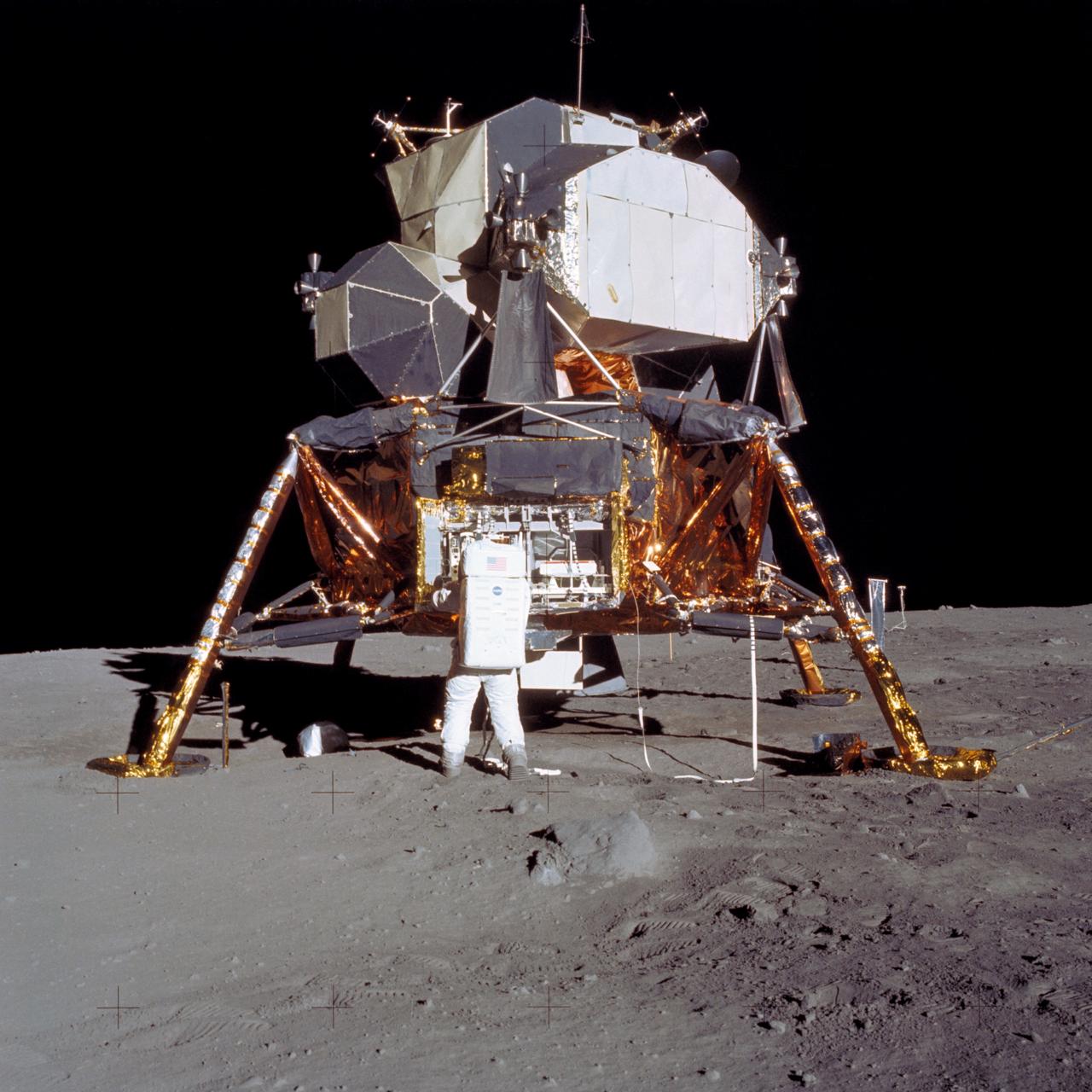
Apollo 11. Buzz Aldrin at the Sea of Tranquility. NASA AS11-40-5927, 21 July 1969. Public domain as a work of the United States government. The photograph is a primary object. It is not a shrine, and it does not cause ARPANET.
Same year. No arrows.
UCLA to SRI · about 22:30
29 October 1969
LO
The first message was meant to be LOGIN. It died at two letters.
Co-occurs. Same year. No arrows.
Code / machine object
Unix development
PDP-7 · 1969 · the name is a neighbor
Book / ancient voice
Temple hymns, in print
Document / place
Stonewall
Christopher Street, 28 June 1969
A police raid, a street, a name that later became a monument. This plate is a place and a date. It is not a science hit multiplied into the instrument cluster. It is independently important culture, listed because the year was crowded.
Field / crowd / cultural object
Woodstock
Bethel, New York · 15–18 August 1969
A dairy farm, a fence that failed, a crowd larger than the ticket. No surviving photograph on this page is claimed as free of rights. The field is the object.
Broadcast / learning
Sesame Street
10 November 1969 · National Educational Television
A children’s hour that treated the screen as a classroom. Characters and trademarks are not reproduced here. The broadcast is the object: a time, a network, a public.
Co-occurs. Same year. No arrows.
MOON
Apollo 11
Placed at the top because it is the farthest public act: two men walk on another body.
NETWORK
ARPANET
Placed at the left because the first message tried to connect machines here, on Earth, and then crashed.
CODE
Unix development
Placed at the right because it was a private lab after Multics, not a spectacle. Named in 1970.
ANCIENT VOICE
Temple hymns edition
Placed at the bottom because the depth is time: a 1969 edition of Sumerian hymns, forty-two in number. Enheduanna’s authorship is debated. That is not a 42 proof.
Every placement is argued. Lines mark the same year. They do not mean leads-to. Proximity on this page is editorial.
MOON
Another world, briefly
Apollo 11 landed two men on the Moon and returned them, with Collins in the command module. It fulfilled a presidential goal set in 1961 and a technical program that had already killed the Apollo 1 crew in 1967. It did not end the Cold War. It did not make the Moon a home.
Before
Mercury, Gemini, Apollo 8’s lunar orbit in December 1968, Soviet Luna and Zond. 1968 is part of this story’s neighbor.
Why
A political race, a scientific chance, an engineering proof. All three, in different mouths.
Who
Three crew. A vast program. Soviet competitors. A global television public. People whose names are not on the plaque.
Neil Armstrong · Buzz Aldrin · Michael Collins · Mission Control, Houston · thousands of unnamed engineers, contractors, and the tracked workers of the Apollo program
What
Launch, lunar landing, a short walk, samples, photographs, a flag, a plaque, return.
How
Saturn V, command and lunar modules, ground tracking, procedures written to the minute.
The hinge
The hinge is a foot on dust, and a voice confirming it, and a world watching a delay from another body.
Where, and when
Florida, cislunar space, Mare Tranquillitatis, the Pacific recovery. Launch 16 July. Landing 20 July 20:17 UTC. EVA 21 July UTC. Splashdown 24 July.
16–24 July 1969; landing 20 July · Launch from Kennedy Space Center; Sea of Tranquility; Columbia in orbit
What they knew
They knew they might die. They knew the landing was the assigned miracle. They did not know how long humans would stay away afterward.
What they could not know
The long gap after 1972, later robotic science, Artemis promises, or the later uses of the photographs as almost religious images.
Source object
Mission transcripts, Hasselblad photographs, 21.5 kg of samples
Primary NASA records. Photographs are public. This page will not fake a moonscape.
The object survives.
First record
Telemetry, air-to-ground, onboard recording, contemporaneous journalism.
After
Apollo continued to 1972. Then a pause measured in decades.
Later retelling
One small step as a proverb. The proverb is earned and also worn smooth. Collins in orbit is often forgotten. The program’s workers are often forgotten.
Limit
A landing is not a settlement, not a proof of numerical fate, not a sacrament of 69.
What it does not prove
Does not make 1969 cosmically appointed.
Why it entered
Included because it independently remade what 'far' meant, in this year.
Question
What happens to 'here' when someone is briefly elsewhere?
How we know
- 1. NASA. Apollo 11 mission documentation: air-to-ground transcripts, photographs, and sample catalogs. July 1969.
Method
independent firsthard
NETWORK
Two letters, then a crash
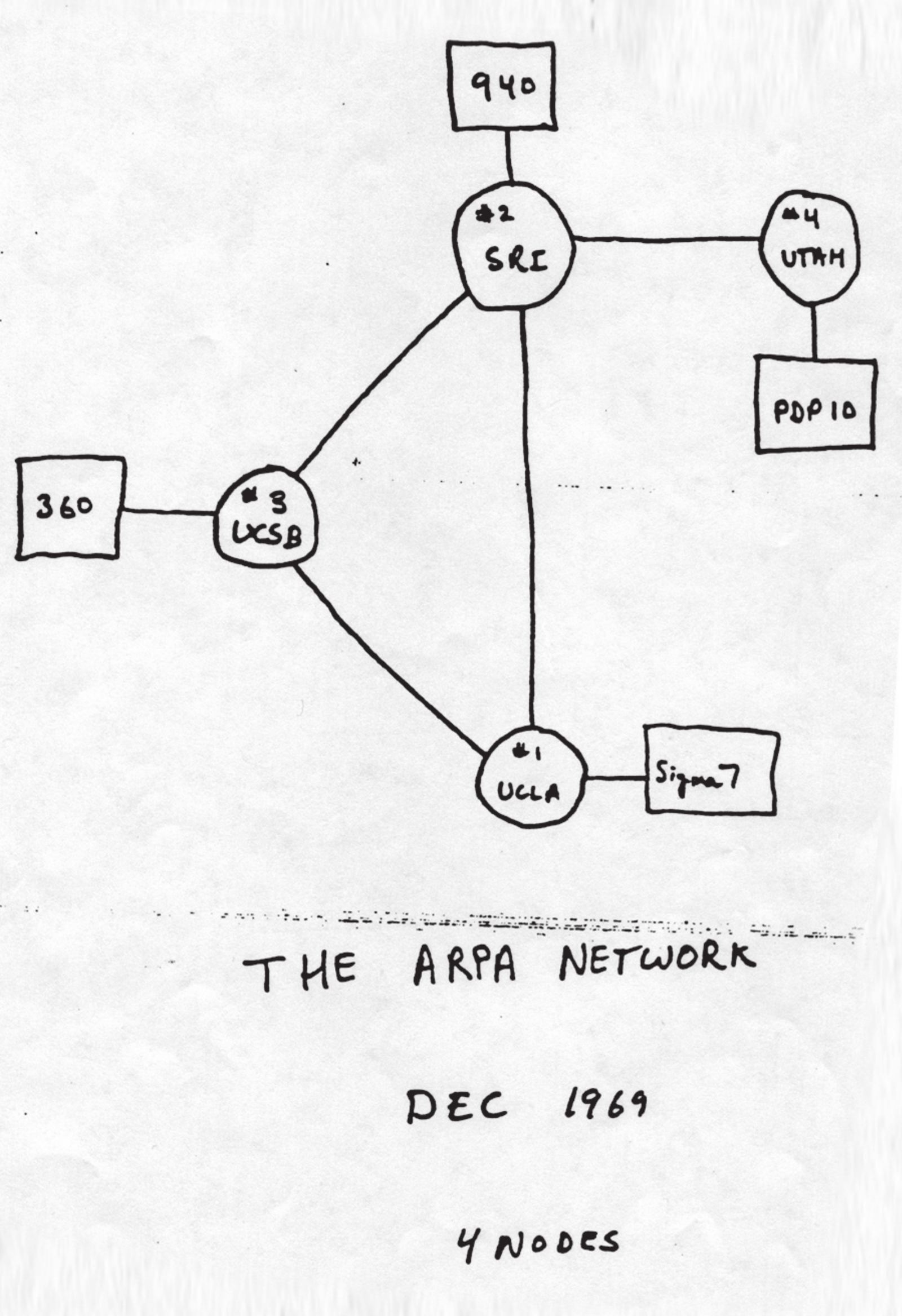
The first ARPANET message was meant to be LOGIN, from UCLA to the Stanford Research Institute. The system crashed after L and O. The rest followed later that evening. Four nodes existed by year’s end: UCLA, SRI, UCSB, Utah. This is not 'the internet' in one instant.
Before
Time-sharing, packet-switching papers (Baran, Davies, Kleinrock), the 1960s ARPA computing office.
Why
Time-sharing computers were expensive. Researchers wanted to share machines and, later, to share resources across distance.
Who
Graduate student Charley Kline at Kleinrock’s UCLA lab; operators at SRI; BBN’s Interface Message Processors; ARPA as funder.
Charley Kline · Leonard Kleinrock · Douglas Engelbart’s group at SRI · Bolt, Beranek and Newman (IMPs)
What
A packet message across a purpose-built research network.
How
IMPs, leased lines, host software that was still being written.
The hinge
The hinge is LO, then failure, then a completed login. Incomplete is the true first record.
Where, and when
UCLA’s Boelter Hall and SRI in Menlo Park. Not yet a public network. 29 October 1969, about 22:30.
29 October 1969 · UCLA to SRI, over the first ARPANET link
What they knew
They knew they were testing a link. They did not think they were founding daily life.
What they could not know
The public internet, the web, platforms, or this page.
Source object
Kleinrock’s log and later ARPANET documentation
A handwritten log line is the romance; the surviving technical record is the source.
The object survives.
First record
Lab log, 29 October 1969.
After
The network grew through the 1970s. TCP/IP is later (1983 flag day is not 1969).
Later retelling
'The internet was born' is a poster. A research network began to work.
Limit
A four-node research net is not the later internet, and 1969 is not TCP/IP.
What it does not prove
Does not equal 'invention of the internet' as a single bang.
Why it entered
Included as a dated connection between machines, with its incompleteness intact.
How we know
- 1. Leonard Kleinrock and UCLA records of the first ARPANET transmission, 29 October 1969, UCLA to SRI.
Method
independent firsthard
CODE
A small system on a sidelined machine
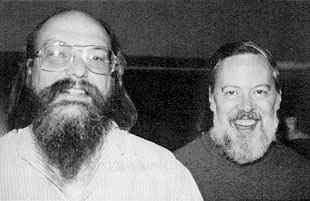
After Bell Labs withdrew from Multics, Ken Thompson, soon with Dennis Ritchie and others, built a small operating system on a discarded PDP-7. 1969 is the development year. The name Unix is 1970. The C language is later. The consequence, for someone who does not work in computing, is this: a portable way of organizing time-shared machines that later ran much of the networked world.
Before
Multics, CTSS, other 1960s systems. Unix is a retreat that became a lineage.
Why
They wanted a pleasant environment for programming after Multics ended. Thompson also wanted to play a space game. Both can be true.
Who
Thompson first; Ritchie and the Bell Labs circle; a lab that had just lost a bigger dream.
Ken Thompson · Dennis Ritchie · Bell Labs colleagues
What
An operating system, at first personal and small, later rewritten and shared.
How
A discarded machine, a file-system idea, tools that compose.
The hinge
The hinge is a working small system in 1969, not a press conference.
Where, and when
A research lab in New Jersey, not a garage myth and not a government war room. 1969 for the PDP-7 system. Do not print 'Unix was born' as if it were a birth certificate.
1969 (development year; the name Unix and C are slightly later) · Bell Labs, Murray Hill, New Jersey
What they knew
They knew they were making a system for themselves and their lab.
What they could not know
Linux, macOS, Android, servers, or the later legal and cultural wars over Unix.
Source object
Later Unix source history; Bell Labs memoirs
Early code is reconstructed from later versions and recollections. Treat 1969 as development, not as a single surviving disk image for the public.
The object survives.
First record
Lab practice and later written histories by the authors.
After
PDP-11, rewrite in C, distribution to universities, forks.
Later retelling
Origin stories compress 1969–1973 into a bang. This page will not.
Limit
A development year is not a product launch and not 'the internet.'
What it does not prove
Does not make 1969 the sole Unix year.
Why it entered
Included as a consequential computing lineage with a honest date-range.
How we know
- 1. Ritchie, Dennis M., and Ken Thompson. Later accounts of the origin of the Unix system at Bell Labs, 1969–1973. Treat 1969 as development, 1970 as the name.
Method
independent firsthard
ANCIENT VOICE
An ancient voice, a modern book
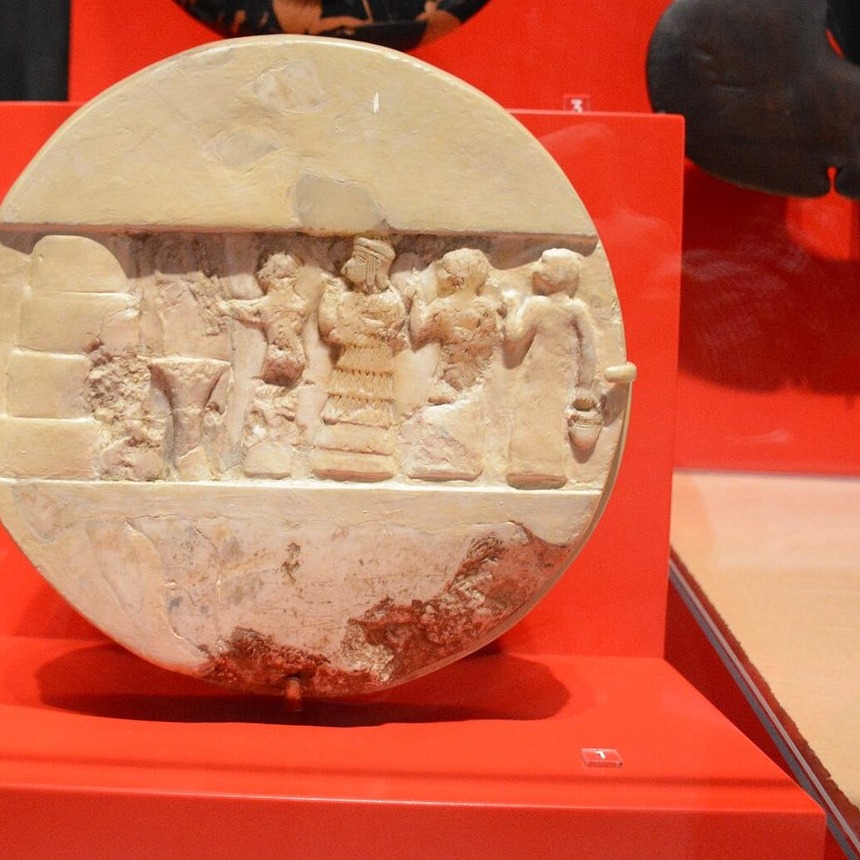
In 1969 Sjöberg and Bergmann published The Collection of the Sumerian Temple Hymns, a modern scholarly edition of a cycle of temple hymns from the third millennium BCE. The collection is traditionally associated with Enheduanna, high priestess of Nanna at Ur, daughter of Sargon of Akkad, often called the earliest named author in world literature. The hymns number forty-two. That count is an ancient corpus fact, not a 1969 invention. 1969 is the year a standard edition made the collection widely usable in modern scholarship. Historical work and numerical wink must stay distinct.
Before
Tablets were known. Enheduanna’s name was already in the field. A collected modern edition of this cycle is what 1969 adds.
Why
Assyriology needed a usable edition of a major liturgical and geographic cycle.
Who
Sjöberg and Bergmann as editors; Enheduanna as the ancient figure named in the tradition as compiler of the temple hymns. Attribution of every hymn to her as author is a scholarly argument, not a settled census. She is more securely tied to other works, including the Exaltation of Inanna.
Åke W. Sjöberg · Eugen Bergmann · Gene B. Gragg · Enheduanna (ancient attribution, debated in parts)
What
A critical edition: cuneiform, translation, commentary, in Texts from Cuneiform Sources, volume 3, J. J. Augustin, 1969.
How
Philology: tablets, variants, translation.
The hinge
The hinge for this project is a publication date meeting an ancient forty-two-hymn cycle. The hinge for history is Enheduanna’s world, which is not 1969.
Where, and when
A twentieth-century scholarly press. The texts themselves belong to temples of Sumer, known from tablets copied in Old Babylonian schools among other contexts. Publication year 1969. Composition of the hymns: centuries around the 23rd century BCE, with later copies.
1969 (publication of the modern edition) · Locust Valley, New York, in print; the hymns themselves from old Sumerian cities
What they knew
The editors knew they were publishing Sumerian. They were not staging a 69 spectacle.
What they could not know
That a later pattern test would notice the publication year beside Apollo and ARPANET.
Source object
The Collection of the Sumerian Temple Hymns (1969)
A modern book. The ancient objects are clay tablets in museums.
The object survives.
First record
Ancient: tablets. Modern first collected edition of this kind: 1969. Do not confuse them.
After
Later scholarship continues to argue authorship, compilation, and the politics of 'first author.'
Later retelling
A wink: 42 hymns, edition in 1969. If this page treated the wink as a cause, it would fail its own law. It will not.
Limit
A 1969 edition does not move Enheduanna into the Space Age. The 42 is a property of the corpus, not a proof of this aperture.
What it does not prove
Does not prove synchronicity, simulation, or that 1969 was appointed to republish 42 hymns.
Why it entered
Included because the edition is real, the ancient poet must be introduced rather than assumed, and the numerical wink is labeled as a wink.
How we know
- 1. Sjöberg, Åke W., and Eugen Bergmann. The Collection of the Sumerian Temple Hymns. Texts from Cuneiform Sources, vol. 3. Locust Valley, NY: J. J. Augustin, 1969. With a study by Gene B. Gragg.
Method
number searchlivingcontested
The aperture
SKY, COMPUTATION, COMMUNICATION, WRITING, CULTURE, CONNECTION. Dense because the century is dense, and because this year has been researched hard. Density is not destiny. 1968 is also loud. The comparison is mandatory.
Regions checked
- North America
- Europe
- East Asia
- Southeast Asia (Vietnam War continuing)
- Africa
- Middle East
- South Asia
- Oceania
- the Americas
Included / excluded
- Included: Apollo 11
- Included: ARPANET
- Included: Unix (as development year)
- Included: Temple hymns edition
- Excluded: Jung’s synchronicity as a 1969 origin. A miss. Original German essay 1952; English 1955; Collected Works vol. 8 first in 1960. 1969/1970 is at best a later printing. See Misses.
- Excluded: Internet born in an instant. Overclaim. See ARPANET story limit.
- Excluded: Counting Stonewall, Woodstock, and Sesame Street as extra science hits. They are independently important culture. They are listed in global context. They are not multiplied into the instrument cluster to inflate 1969.
68 | 69 | 70
Same century. Same research threshold. Matched frames. Neither pane brighter except that the middle year is the selected aperture.
1968
Neighbor
Tet Offensive. Prague Spring. May in France. Assassinations of Martin Luther King Jr. and Robert Kennedy. Apollo 8 orbits the Moon. A control year that is, in political and cultural memory, often heavier than 1969. If this project hid 1968, 1969 would look more unique than it is.
1969
Aperture
SKY, COMPUTATION, COMMUNICATION, WRITING, CULTURE, CONNECTION. Dense because the century is dense, and because this year has been researched hard. Density is not destiny. 1968 is also loud. The comparison is mandatory.
1970
Neighbor
First Earth Day. Kent State. IBM floppy disk. Unix named around 1970. Neighbor continues the computing and political weather.