Present year
1469
A marriage, and a birth.
On 19 October 1469, Ferdinand of Aragon married Isabella of Castile at Valladolid. In the Punjab, later Sikh tradition dates the birth of Guru Nanak to 1469. The two facts do not cause each other. They share a year, and they both changed later maps of power and devotion.
What gathers when a year holds more than one beginning?
Same year. Nothing more.
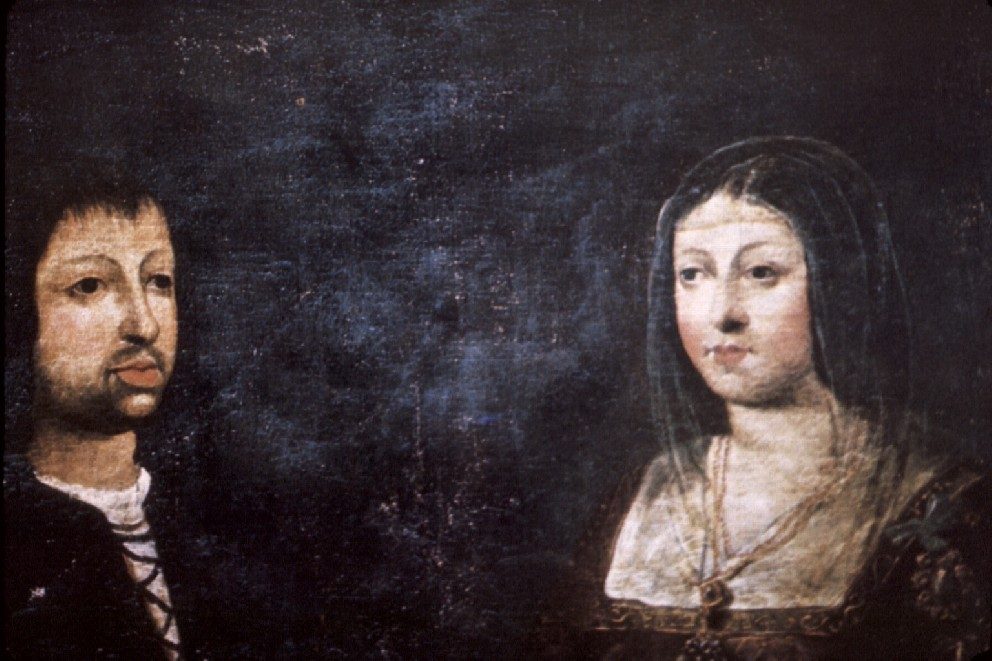
Castile
A wedding
19 October 1469, Valladolid. Ferdinand of Aragon married Isabella of Castile. A political contract. Spain as a single state is later, and incomplete as a description. The painting is later. The date is not.
Same year
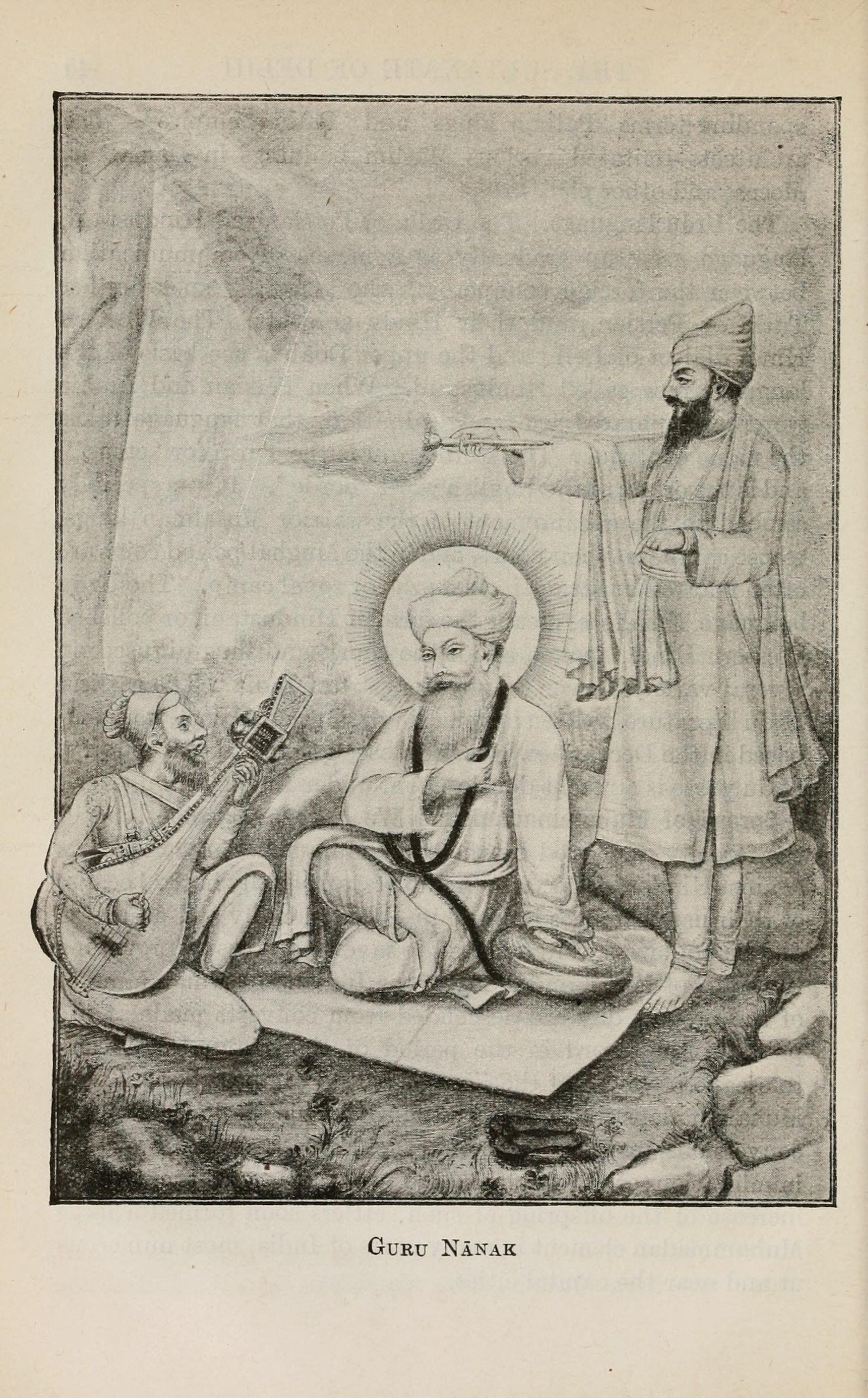
Punjab
A birth year
Sikh tradition dates Guru Nanak’s birth to 1469. The day is contested inside the tradition. It is not a parish register. The painting is later. Same year. Nothing more.
Niccolò Machiavelli was also born in 1469. Incidental biography. His political writing is later. He is not paired here.
TWO SHORES
Valladolid and Nankana
The Trastámara marriage joined the two principal Spanish crowns in persons, though not yet in a single state. Sikh tradition places Guru Nanak’s birth in 1469 at Rai Bhoi di Talwandi, later Nankana Sahib. The calendar match is not a mechanism.
Before
Iberia was plural: Castile, Aragon, Granada, Portugal, Navarre. North India was a Sultanate landscape with deep Sanskritic and Islamic cultures.
Why
Castile and Aragon sought advantage against Portugal, France, and internal rivals. Nanak’s later teaching answered a North Indian world of Sultanate power, bhakti, and Islamic devotion. The infant of 1469 was not yet that teacher.
Who
Two Iberian heirs and their negotiators; in the Punjab, the family into which Nanak was later said to have been born. Nanak’s own dates are traditional and internally discussed (Vaisakh versus Katak).
Ferdinand of Aragon · Isabella of Castile · Guru Nanak (traditional birth year)
What
A royal wedding that made a later dynastic union possible, and a birth-year in a religious tradition that would become Sikhism.
How
A dispensation, a secretive wedding, a political contract. A birth recorded by later janamsakhi tradition, not by a 1469 hospital register.
The hinge
Keep the wedding as a wedding. Keep the birth year as tradition, not as a state archive.
Where, and when
The Palacio de los Vivero in Valladolid; the Punjab under the Lodi Delhi Sultanate’s wider world. The wedding date is secure: 19 October 1469. Nanak’s exact day is contested inside the tradition; the year 1469 is the common scholarly convention.
19 October 1469; traditional birth year 1469 · Valladolid, Castile; the Punjab
What they knew
The Iberian actors knew they were making a match. They did not know 1492. Contemporary Punjab did not know a future world religion.
What they could not know
The later Catholic Monarchs title, Granada, the Inquisition’s intensification, oceanic empire; or the later Sikh panth, Khalsa, and partition geography of Nankana Sahib.
Source object
Marriage capitulations and chronicles; janamsakhi literature
Iberian documentary record is strong. Nanak’s birth is a living religious chronology with internal date debates.
The object survives.
First record
Spanish diplomatic and chronicle record for the wedding. Sikh hagiographic and later historical tradition for Nanak.
After
Isabella became queen of Castile in 1474; Ferdinand of Aragon in 1479. Nanak’s public teaching is a later life.
Later retelling
English textbooks make 1469 the birth of Spain. Spain as a single state is later and incomplete as a description. Nanak’s year is sometimes presented as if it were a parish register. It is not.
Limit
A diptych is an editorial form. It is not evidence that marriage and birth rhyme by law of 69.
What it does not prove
No hidden relation between Valladolid and the Punjab.
Why it entered
Included because both are independently important, and because the year is more than Europe if we actually look.
How we know
- 1. Marriage of Ferdinand of Aragon and Isabella of Castile, Valladolid, 19 October 1469. Capitulations and chronicles.
- 2. Sikh janamsakhi tradition and modern discussion of Guru Nanak’s birth year (commonly 1469) and the Vaisakh/Katak date dispute.
Method
independent firsthardcontested
The aperture
POLITICAL HISTORY and SACRED TRADITION. Present. Two shores.
Regions checked
- Europe
- South Asia
- East Asia (Ming)
- Africa
- the Americas (Aztec, Inca)
- Middle East (Ottoman, Mamluk)
Included / excluded
- Included: Iberian marriage; Nanak’s traditional birth year
- Excluded: Unification of Spain. Overclaim. Crowns remained legally distinct. Granada fell in 1492.
- Excluded: Birth of Niccolò Machiavelli as a pattern hit. 1469 is his birth year. Incidental biography. His political writing is later. Not paired with Nanak or with Valladolid.
68 | 69 | 70
Same century. Same research threshold. Matched frames. Neither pane brighter except that the middle year is the selected aperture.
1468
Neighbor
Death of Skanderbeg. Burgundian and Italian politics continue.
1469
Aperture
POLITICAL HISTORY and SACRED TRADITION. Present. Two shores.
1470
Neighbor
Wars of the Roses: Readeption of Henry VI. English neighbor is loud.