Outside the aperture
Near field
Some dates matter to the story without belonging to the primary year-ending datasets. They are kept here so the numerical form can be noticed without changing the denominator.
This is not a dumping ground for interesting numbers. The core tests remain: years ending in 69, from 69 CE through 1969, and years ending in 42, from 42 CE through 1942.
The number inside the year
Same numerical class. Not the same historical story.
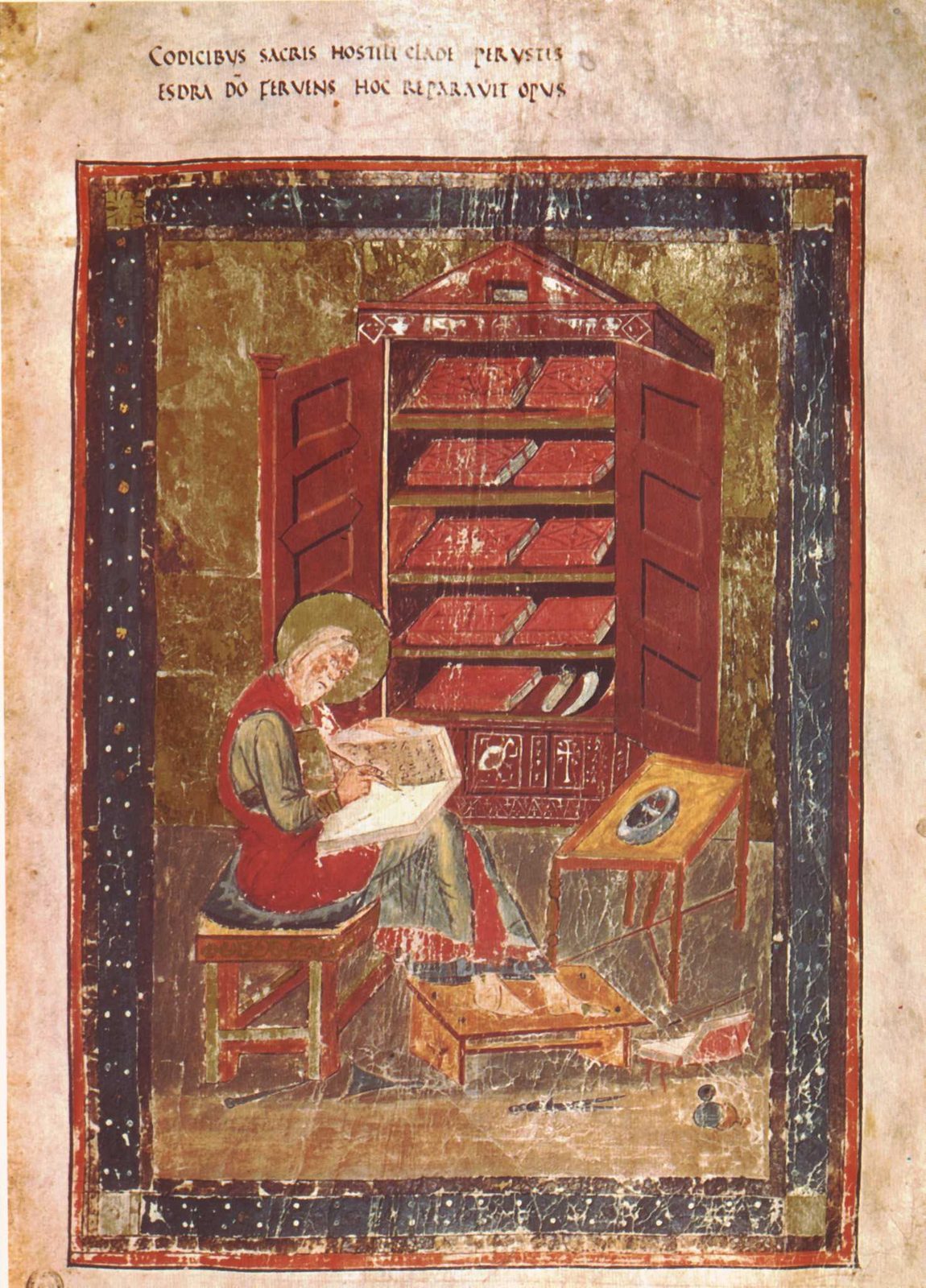
420
Contains 42
Jerome, a dynasty, a succession
A late antique year investigated because 1690 had already been admitted as a contained form. Not an x42 year.
Matched frames because they share a class: a target number sitting inside a year that does not end with it. The geometry does not say they mean the same thing.
Admission test
A date may enter only if all four hold. Searching every year that contains 42 or 69 would become a second cherry-picking mechanism. We do not do that.
- 01 It contains one of the investigated numerical forms.
- 02 The historical event independently matters, without the number.
- 03 The event has a defensible relationship to an established field or to the origin story of this project.
- 04 Its status outside the formal dataset is unmistakable.
A number can enter a date in different ways
These are different claims
Same digits can mean an exact year, a terminal pair, a number sitting inside a larger year, a designed scale, or a later calendar label. Mixing them is how a wink becomes a fake dataset.
42 CE
Exact year number
The year is the number.
An x42 year. Quiet under the declared categories. Neighbors 41 and 43 are louder.
142
Year ending in 42
The terminal pair is 42.
The primary x42 aperture. Same class as 1842 and 1942.
420
Number contained within year
42 sits inside 420.
Near Field. Not an x42 year. Not a control. Not a proof.
1690
Number contained within year
69 sits inside 1690.
Near Field. Origin of the question. Not an x69 year.
1969
Year ending in 69
The terminal pair is 69.
The original aperture. Same class as 1269 and 1669.
Equal frames. No ranking. Cipher 420 as ten times 42 is a designed seal, shown on Cipher, not in this row. 420 CE is the contained year. Do not add them together.
A formal numerical taxonomy
Year ending in a number
1269, 1669, 1969, 1842, 1942
The formal apertures. Twenty century years each. This is the denominator.
Number contained within a year
1690 contains 69. 420 contains 42.
Visible inside the written year, not as its ending. Near Field, if and only if the history independently matters.
Exact year number
42 CE, 69 CE
The year is the number. Still a member of the ending series, not a different magic.
Designed number
Cipher 420 as ten times 42. Cipher 690 as ten times 69.
Someone, including this archive, chose the number. Designed is not discovered.
Derived number
JOHN LOCKE reverse-reduces to 42
The number appears after a calculation. Provenance of a question, not a cause in the century.
Retrospective chronological coordinate
420 CE as a modern Anno Domini label
Later calendrical notation assigns the year. The events are historical. The people in them did not necessarily live under that numeral.
Where does the number live?
In the event? In the source? In the calendar? In our later notation? For ancient and late antique years especially, the people involved were not walking around saying it is 420. The events are historical. The coordinate is legitimate in modern chronology. The label is not proved to have been historically operative unless a source shows it.
01
Historical event
A death, an abdication, a succession. Things that happened.
02
Later chronological system
Anno Domini / Common Era counting, compiled centuries after.
03
Modern date label
Editors print 420 CE. The numeral is a finding aid.
04
420 CE
A coordinate on our shelf. Not necessarily a number the people in the year said aloud.
A correspondence can belong to the coordinate rather than to the historical actor.
Here is what we found
Independent-first, dated objects sit in some of the windows: a magnet letter in 1269, a map in 1569, a glowing residue around 1669, a sky and an engine in 1769, a table and a canal and a weekly in 1869, a moon and a network and a code and an edition in 1969.
The instrument cluster is late. Early centuries are politically full and instrument-quiet. Neighbors ending in 68 and 70 are often as loud or louder: 1368, 1568, 1570, 1868, 1968. The pattern is not unique.
Here is how it was calculated
Every century year from 69 CE through 1969 was held open. Categories were named before attractive examples were allowed to invent new ones. Independent-first events outrank number-search. Neighbor years were researched under the same threshold. Quiet fields were kept.
Here is what is historically true
Dates, objects, and first records are cited. A conventional year is marked as conventional. A miss stays a miss. Jung’s synchronicity is not a 1969 origin. The compass was not invented in 1269. Unix was named in 1970. The 868 Diamond Sutra outranks 869 as a communication object.
Here is what we do not know
We do not know a mechanism. Same year is not a cause. Recurrence is not a baton. The 1969 Sumerian temple hymns edition contains 42 hymns; Enheduanna’s authorship is debated. That is not a 42 proof smuggled into a 69 test.
You may notice the rest.
Future candidates only after they pass the same test. The primary spines are the 69 years and the 42 years.