Outside the aperture
420
Numerical form: 42 within 420. Outside the primary aperture. Not an x42 year.
The number catches the eye. First: what was the world actually doing?
420 is a modern chronological coordinate applied to a late antique world. Jerome of Stridon died in Bethlehem that year. In Jiankang, Liu Yu took the throne and the Eastern Jin ended. In the Sasanian empire, Yazdegerd I died and a contested succession began. These events share a later label. They do not share a cause.
What survives when an age changes?
Do not answer it with a number. Possible survivors are historical objects: a text, a language, a dynasty, a religious community, a political order, a memory.
Hebrew
בְּרֵאשִׁית בָּרָא אֱלֹהִים
Transcription: Bereshit bara Elohim. Genesis 1:1, the opening Jerome insisted should rest on Hebrew, the Hebraica veritas, not only on the Greek of the Seventy.
Greek
Ἐν ἀρχῇ ἐποίησεν ὁ θεός
Septuagint. The Old Latin had mostly come this way. Jerome revised the Gospels against Greek copies; for the Hebrew scriptures he went behind this line.
Latin
In principio creavit Deus
Vulgate wording of the same verse. Later school Latin. Jerome’s labour was to make this a door onto Hebrew, not a copy of a copy of Greek.
Same modern year. Nothing more.
Three regions, not three identical cards. Bethlehem holds the largest story because the surviving work is a language. Jiankang and the Sasanian world are the planet around it. No arrows.
Bethlehem
Translation
Jerome dies. Hebrew, Greek, and Latin have already been made to speak to one another in his workshop. The books remain.
Jiankang
Dynasty
Liu Yu takes the throne. The Eastern Jin ends. A southern order is renamed.
Sasanian world
Succession
Yazdegerd I dies. The sources split. A son will have to fight for the crown.
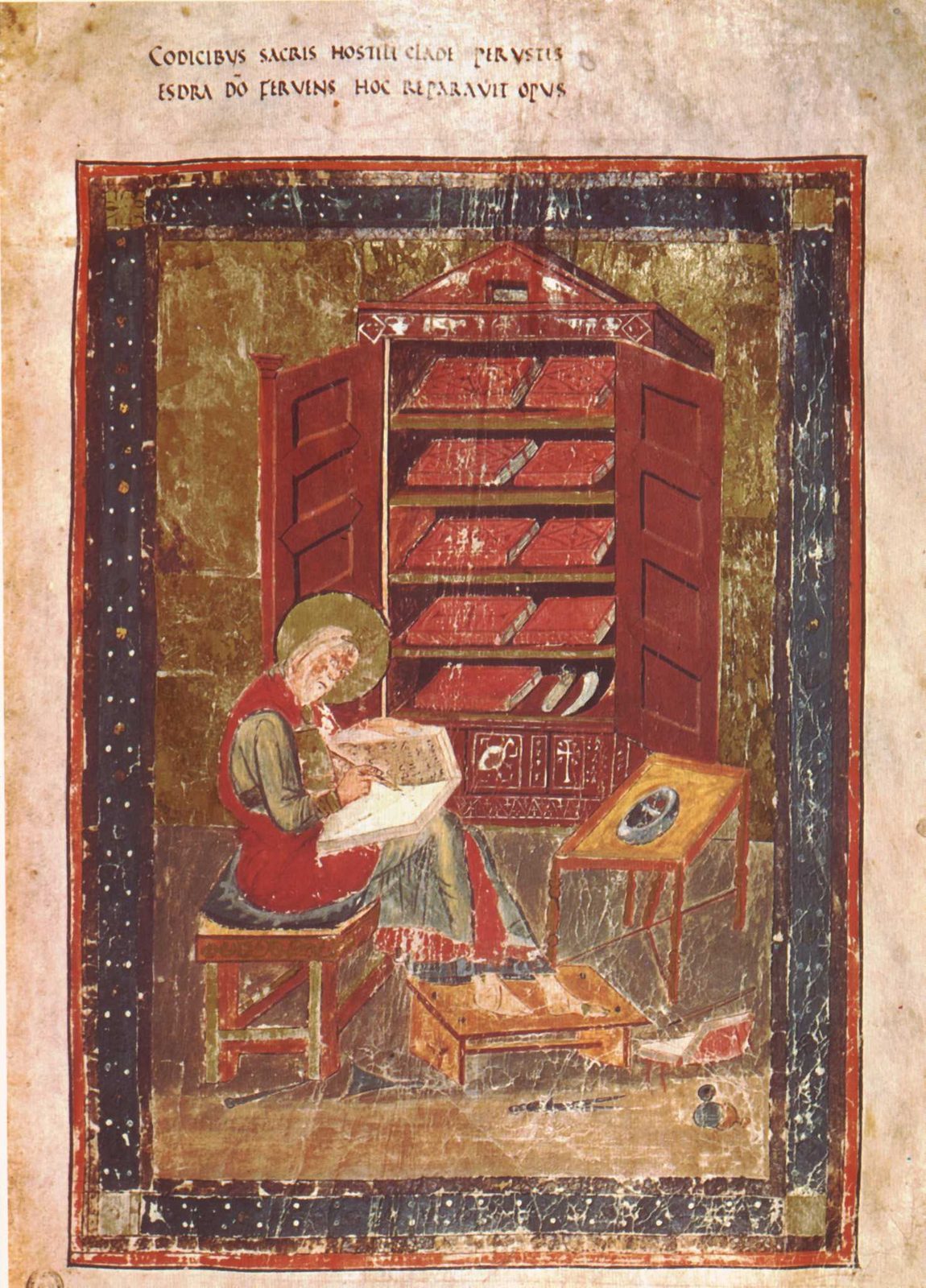
Source object, later
No Bethlehem autograph of 420 survives. What can be shown honestly is a later Latin book in the tradition Jerome shaped, and the three languages the work had to cross.
Would we still consider this history without the modern slang around 420? Yes. Jerome, a southern Chinese founding, and a Sasanian succession are independently major. The slang is not a reason to historicalize the year, and it is not on this page as evidence.
BETHLEHEM · TRANSLATION
A man between languages
Jerome (Eusebius Sophronius Hieronymus, born at Stridon c. 342 to 347) spent his last decades in a monastery beside the Church of the Nativity. He had revised the Latin Gospels against Greek manuscripts for Damasus I, then translated the Hebrew scriptures into Latin because he judged the Hebrew the truer source. Later tradition named the resulting Latin Bible the Vulgate. He did not live to see that name become a church. He died in Bethlehem. The dating is given by Prosper of Aquitaine’s Chronicon and by the Western feast on 30 September.
Before
Latin Christians already had the Vetus Latina, a family of translations mostly from Greek. Hebrew learning among Latin clergy was scarce. After 410 the Western empire was politically broken; the books were not.
Why
He thought Latin readers should hear the Hebrew truth of the Old Testament rather than only the Greek Septuagint, and that the existing Old Latin Gospels needed to be brought closer to Greek copies. The motive is linguistic and doctrinal. It is not a number.
Who
A Dalmatian-born priest, scholar, and controversialist. He learned Greek in the East and Hebrew from Jewish teachers. Paula of Rome funded the Bethlehem houses. Damasus had commissioned the Gospel revision in 382. Jerome’s opponents and allies already filled Latin Christendom before 420.
Jerome of Stridon · Paula of Rome · Pope Damasus I
What
A death that closes a long workshop, not a single night of translation. The Hebrew Old Testament work is generally placed as complete around 405. Commentaries continued. The later one-volume Latin Bible is a collection: Jerome’s Hebrew Old Testament, his Gospel revision, and other books not all securely his.
How
Revision and translation, lemma by lemma, with notes on why a word was chosen. He compared Hebrew, the Greek of the Seventy, and the later Greek versions of Aquila, Symmachus, and Theodotion. Meaning had to survive a change of tongue.
The hinge
The hinge is not a halo. It is a scholar dying in a house of books, having spent decades moving sense from Hebrew and Greek into Latin.
Where, and when
Bethlehem, in Palaestina Prima, in a monastery next to the Church of the Nativity. Not Rome in 420. Rome had been sacked in 410. Jerome wrote through that shock from the East. 30 September 420 in the received Western date. Some older notices say probably 420. Prosper is the principal chronological witness used here. The translation labour itself is the 380s through the 400s.
Death dated 30 September 420 · Bethlehem, Palaestina Prima
What they knew
Jerome knew the cost of a word. He knew Jewish teachers, Greek copies, and Latin readers who would resist a new wording of familiar psalms. He knew controversy. He had already written against Pelagius.
What they could not know
He could not know that a Northumbrian pandect around 700, the Codex Amiatinus, would become a chief witness to the Latin text, nor that the Council of Trent in 1546 would declare a later Vulgate authentic for the Latin Church. He could not know this page.
Source object
Jerome’s biblical translations and revision, later collected as the Latin Vulgate
No autograph of 420 survives. What survives are later manuscripts of a Latin textual tradition he shaped. The Codex Amiatinus is an early eighth-century Northumbrian copy, not a Bethlehem object.
The object survives.
First record
Prosper of Aquitaine’s Chronicon gives the death year. Jerome’s own prefaces, letters, and commentaries are the first record of the work. Later saints’ lives enlarge the man.
After
Latin liturgy, law, and schoolrooms carried his wording for a millennium. The name Vulgate is later. So is the simplification “he translated the Bible.”
Later retelling
Renaissance and Baroque painters made a cardinal in a study with a lion. Those pictures are later art. They are not evidence of 420.
Limit
A death year is not the year the Vulgate was made. Completing a translation around 405 and dying in 420 are different facts. Do not collapse them to fatten a Near Field.
What it does not prove
It does not make 420 an x42 year. It does not prove that 42 attracts translators. It does not license cannabis-culture 420 as history.
Why it entered
Jerome belongs here because languages carry thought across centuries, and because 420 already had to be investigated once 1690 had been admitted as a contained form. He stands without the digits.
Question
How does a thought survive a change of language?
How we know
- 1. Prosper of Aquitaine. Epitoma Chronicon. Fifth-century chronicle giving Jerome’s death in 420. The Western feast on 30 September follows this dating.
- 2. Jerome. Prefaces to the books of the Latin Bible, and selected letters. Statements of Hebraica veritas, the Gospel revision for Damasus I (from 382), and the turn from the Septuagint to Hebrew for the Old Testament, completed around 405.
- 3. Weber, Robert, and Roger Gryson, eds. Biblia Sacra iuxta Vulgatam versionem. 5th ed. Stuttgart: Deutsche Bibelgesellschaft, 2007. Critical text of the Latin Vulgate tradition Jerome shaped; not an autograph of 420.
- 4. Codex Amiatinus. Wearmouth-Jarrow, early eighth century. Biblioteca Medicea Laurenziana, Florence. Earliest nearly complete Latin Vulgate Bible. Later representation of the textual tradition, not a 420 object. See the record
- 5. Kelly, J. N. D. Jerome: His Life, Writings, and Controversies. London: Duckworth, 1975. Standard English biography; used here for context of Bethlehem, Hebrew study, and the limits of later hagiography.
Method
independent firsthard
Not important to the existing work before this search.
JIANKANG · DYNASTY
An abdication in Jiankang
On 10 July 420 Liu Yu took the throne in Jiankang and founded the Liu Song. Emperor Gong of Jin had been made to abdicate. The Eastern Jin, which had ruled the south since 317, ended. Historians later count this year as the start of the Southern Dynasties. The north was not unified with it. Northern Wei under the Tuoba still held the other China.
Before
Eastern Jin had held the south after the north fell in the early fourth century. Great families constrained emperors. Liu Yu’s career is the Beifu army becoming the state.
Why
Liu Yu already held the armies and the court. Abdication, in this political grammar, is how a usurper becomes a founder without pretending the last house never existed.
Who
Liu Yu (363 to 422), posthumously Emperor Wu, a commander of the Beifu army who had risen from poverty. Sima Dewen, Emperor Gong, a Jin prince installed after Liu Yu had Emperor An killed in 419. The ritual of yielding was written so that a new house could claim continuity.
Liu Yu, Emperor Wu of Song · Sima Dewen, Emperor Gong of Jin
What
A forced abdication and a new dynastic name. Not a popular revolution. Not “another dynasty changed” as a shrug. The Jin had become a court that generals could make and unmake. Liu Yu had already restored it from Huan Xuan and campaigned north against Southern Yan and Later Qin. In 420 he kept the Mandate as his own.
How
Pressure through officials, a drafted edict of yielding, a new era name. The Song Shu and Zizhi Tongjian are later compiled histories. They are the surviving narrative, not a stenograph of the hall.
The hinge
A year in which a southern empire changed its name, and a soldier became an ancestor.
Where, and when
Jiankang, on the Yangtze, capital of the southern court. Modern Nanjing. The northern plain was another map. 10 July 420 (dingmao day, sixth month, Yongchu 1) in the standard reconstruction from the Song Shu. The killing of Emperor An is 419, a neighbor, and stays there.
10 July 420 · Jiankang (modern Nanjing)
What they knew
Court elites knew the ritual of abdication from earlier usurpations. They knew the north remained a threat and a prize.
What they could not know
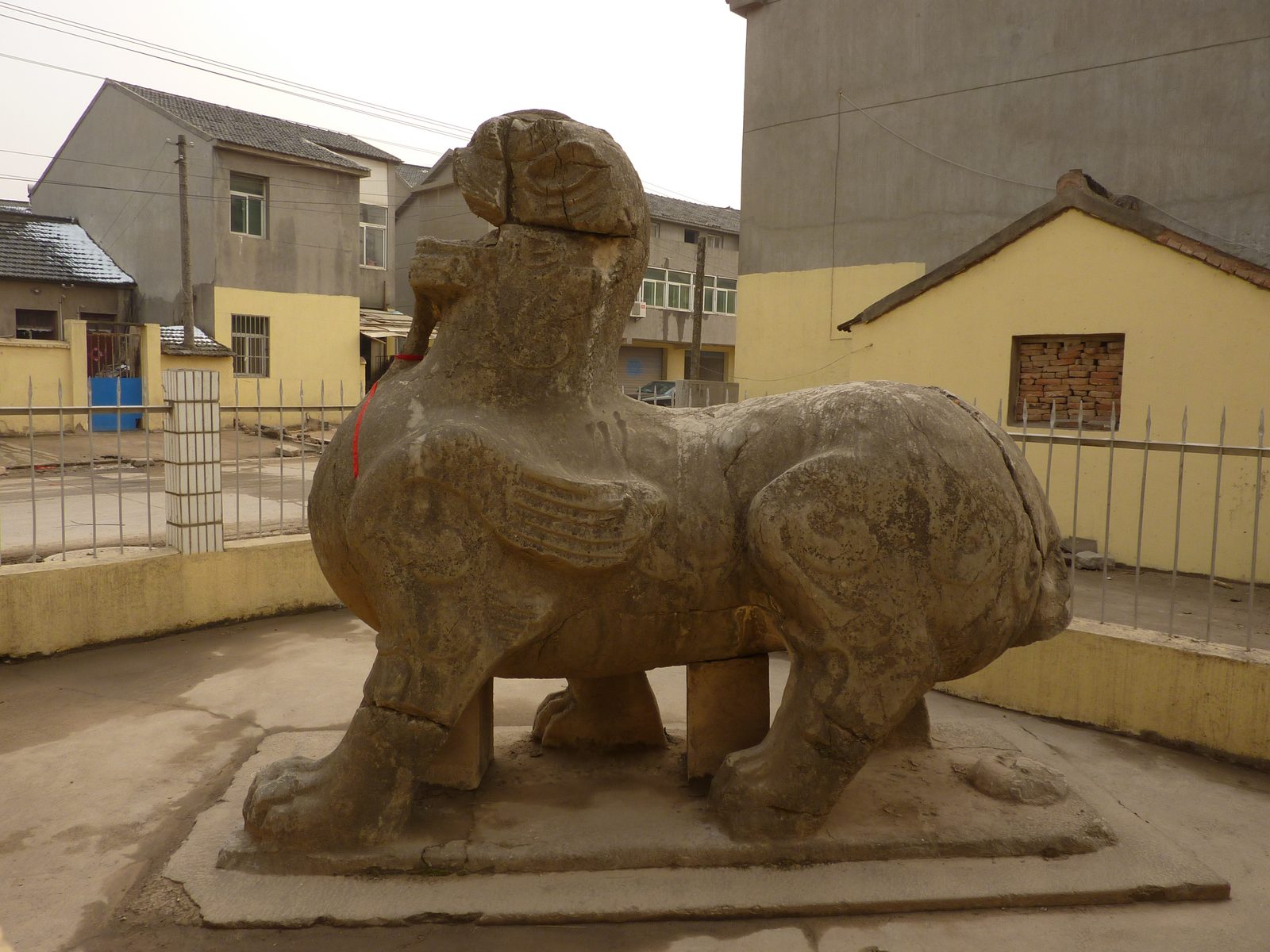
They could not know the Southern Dynasties would run Song, Qi, Liang, Chen until 589, or that a stone qilin at Chuning would outlast the house.
Source object
Song Shu (Book of Song) and the stone qilin of the Chuning Mausoleum
The official history is later compilation. The surviving qilin statues at Liu Yu’s tomb near Nanjing are period stone, not a painted court scene.
The object survives.
First record
Song Shu, Nan Shi, and Sima Guang’s Zizhi Tongjian. No 420 newspaper. Official historiography is the first continuous record.
After
Liu Yu died in 422. The Liu Song lasted until 479. Southern Dynasties chronology begins, in later textbooks, here.
Later retelling
A modern sentence that says “China changed dynasties” erases the split north, the ritual, and the army.
Limit
Do not treat 420 as the unification of China. It is a southern founding beside a northern empire.
What it does not prove
It does not bind Jiankang to Bethlehem. Same modern year. Nothing more.
Why it entered
A political order was renamed. The year is independently major in East Asian chronology. The digits 420 are our later label, not Liu Yu’s reign title.
How we know
- 1. Shen Yue. Song Shu (Book of Song). Official history of the Liu Song. Record of Liu Yu’s accession on 10 July 420 (Yongchu 1) at Jiankang, and of the ritual abdication of Emperor Gong.
- 2. Sima Guang. Zizhi Tongjian. Compiled eleventh century. Narrative of the 419 killing of Emperor An and the 420 abdication; a later chronicle, not a 420 diary.
- 3. Stone qilin statues at the Chuning Mausoleum, Qilin Town, Nanjing. Tomb of Liu Yu, Emperor Wu of Liu Song (d. 422). Period southern-dynasty sculpture. See the record
Method
independent firsthard
Not important to the existing work before this search.
SASANIAN WORLD · SUCCESSION
A king dies, and the sources disagree
Yazdegerd I, Sasanian King of Kings from 399, died in 420. Christian writers remembered a ruler who had allowed the Church of the East a synod in 410. Zoroastrian tradition named him the Sinner for curbing the clergy and tolerating minorities. Movses Khorenatsi says disease. A later Persian epic says a white horse near Tus. After him the nobles tried to block his sons. Shapur IV was killed. Bahram V took the throne with Lakhmid support. A Roman war followed in 421. That war is the neighbor, not this year.
Before
Since Shapur II’s death in 379, nobles and priests had often made and unmade kings. Yazdegerd’s long reign was, to some Romans, a peace.
Why
Later factions needed a story about this king. Christians needed a protector. Priests needed a sinner. The succession needed a winner.
Who
Yazdegerd I; his sons Shapur and Bahram; the wuzurgan and Magian clergy; al-Mundhir of al-Hira, who backed Bahram; Christian and Jewish communities inside Iran.
Yazdegerd I · Shapur IV · Bahram V · Khosrow the noble nominee
What
A royal death and a succession fight. Not a simple moral play in which tolerance dies and persecution is born on the same afternoon.
How
Coins continue. Literary sources split. Do not flatten hostile Magian memory and Syriac gratitude into one sentence.
The hinge
A reign ends. The next year will be louder with war. This year holds the death and the scramble.
Where, and when
The Iranian plateau and Ctesiphon on the Tigris. Rome is the western neighbor, not the author of the year. 420 for the death, in the received king-list. Day and place contested (Gurgan or Tus). Bahram’s reign is counted 420 to 438. The Romano-Sasanian war is 421 to 422.
420, exact day not secure · Gurgan or Tus; then Ctesiphon
What they knew
Courts knew that a dead shahanshah opened a hunt. They knew the 410 synod had made an Iranian church legally visible.
What they could not know
They could not know how later encyclopedias would title him, or that this project would refuse the cartoon of the tolerant king.
Source object
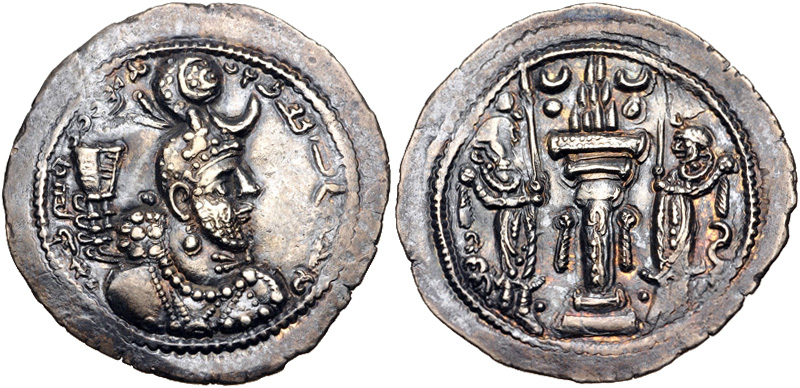
Silver drachm of Yazdegerd I
A surviving face of the reign: mural crown, crescent, mint. Metal from the lifetime, not a later painting of the death.
The object survives.
First record
Coins; later Arabic and Persian histories; Movses Khorenatsi; Roman notices in Procopius and Agathias, some of them doubted even in antiquity.
After
Bahram V becomes the hunter-king of later romance. The 421 war with Rome ends in a peace that again names Christian worship. Neither is a 420 event.
Later retelling
“Tolerant king dies, persecution begins” is a sermon outline. Specialist chronology is messier, and is kept messy here.
Limit
Cause of death is not known with the same confidence as the year of death. Do not pick the horse because it is a better picture.
What it does not prove
It does not make a triad with Jerome and Liu Yu into a single mechanism.
Why it entered
Power changing hands is independently worth a page. It is not evidence that 42 governs Iran.
Question
What happens when power changes hands?
How we know
- 1. Movses Khorenatsi. History of the Armenians. Fifth-century Armenian history. Notices Yazdegerd I’s death in 420 as by disease. Later Persian epic (Ferdowsi) gives a white horse near Tus; treated here as later legend, not as a first record.
- 2. Encyclopaedia Iranica, s.v. “Yazdegerd I” and “Bahrām V Gōr.” Specialist frame for the 399 to 420 reign, the “Sinner” title in Magian memory, Christian notices of the 410 synod, and the succession through Shapur IV, Khosrow, and Bahram V. See the record
- 3. Silver drachm of Yazdegerd I, Gurgan or Qum mint, 399 to 420. Classical Numismatic Group photograph. Lifetime coin, not a death scene. See the record
- 4. Procopius. Wars, notices of Roman-Sasanian relations under Yazdegerd I. Agathias later questions parts of the Roman diplomatic legend. Used here as a limit, not as a proof of guardianship stories.
Method
independent firsthardcontested
Not important to the existing work before this search.
Open the year
Near Field should be more rigorous, not less, because it sits outside the denominator. Opening 420 is not a hunt for a hidden 42.
419 | 420 | 421
Calendar neighbors of this year. Not 41 | 42 | 43. Not a control of the 42 aperture. 420 is not in that dataset.
419
Liu Yu has Emperor An of Jin killed and installs Sima Dewen as Emperor Gong. A neighbor of the 420 abdication. Not an x42 control.
420
Numerical form: 42 within 420. Outside the primary aperture. Not an x42 year.
421
Bahram V’s war with Rome begins. Honorius makes Constantius co-emperor on 8 February. Augustine’s Contra Julianum is often placed here. The neighbor is loud. It is not this page.
1690 | 420
Do not create a false direct relationship. Both are contained forms. Locke’s title page contains 69. This year contains 42. Their verified relationship is methodological: once one contained form had been admitted, the other had to be investigated under the same rules.
1690 · contains 69 · origin of the question
Here is what we found
Independent-first, dated objects sit in some of the windows: a magnet letter in 1269, a map in 1569, a glowing residue around 1669, a sky and an engine in 1769, a table and a canal and a weekly in 1869, a moon and a network and a code and an edition in 1969.
The instrument cluster is late. Early centuries are politically full and instrument-quiet. Neighbors ending in 68 and 70 are often as loud or louder: 1368, 1568, 1570, 1868, 1968. The pattern is not unique.
Here is how it was calculated
Every century year from 69 CE through 1969 was held open. Categories were named before attractive examples were allowed to invent new ones. Independent-first events outrank number-search. Neighbor years were researched under the same threshold. Quiet fields were kept.
Here is what is historically true
Dates, objects, and first records are cited. A conventional year is marked as conventional. A miss stays a miss. Jung’s synchronicity is not a 1969 origin. The compass was not invented in 1269. Unix was named in 1970. The 868 Diamond Sutra outranks 869 as a communication object.
Here is what we do not know
We do not know a mechanism. Same year is not a cause. Recurrence is not a baton. The 1969 Sumerian temple hymns edition contains 42 hymns; Enheduanna’s authorship is debated. That is not a 42 proof smuggled into a 69 test.
You may notice the rest.